
Cornhole Tips & Strategies
HOW TO THROW
CORNHOLE BAGS
Learn how to throw cornhole bags with better accuracy and consistency. Discover proper grip, stance, release techniques, and practical tips for improving every toss.
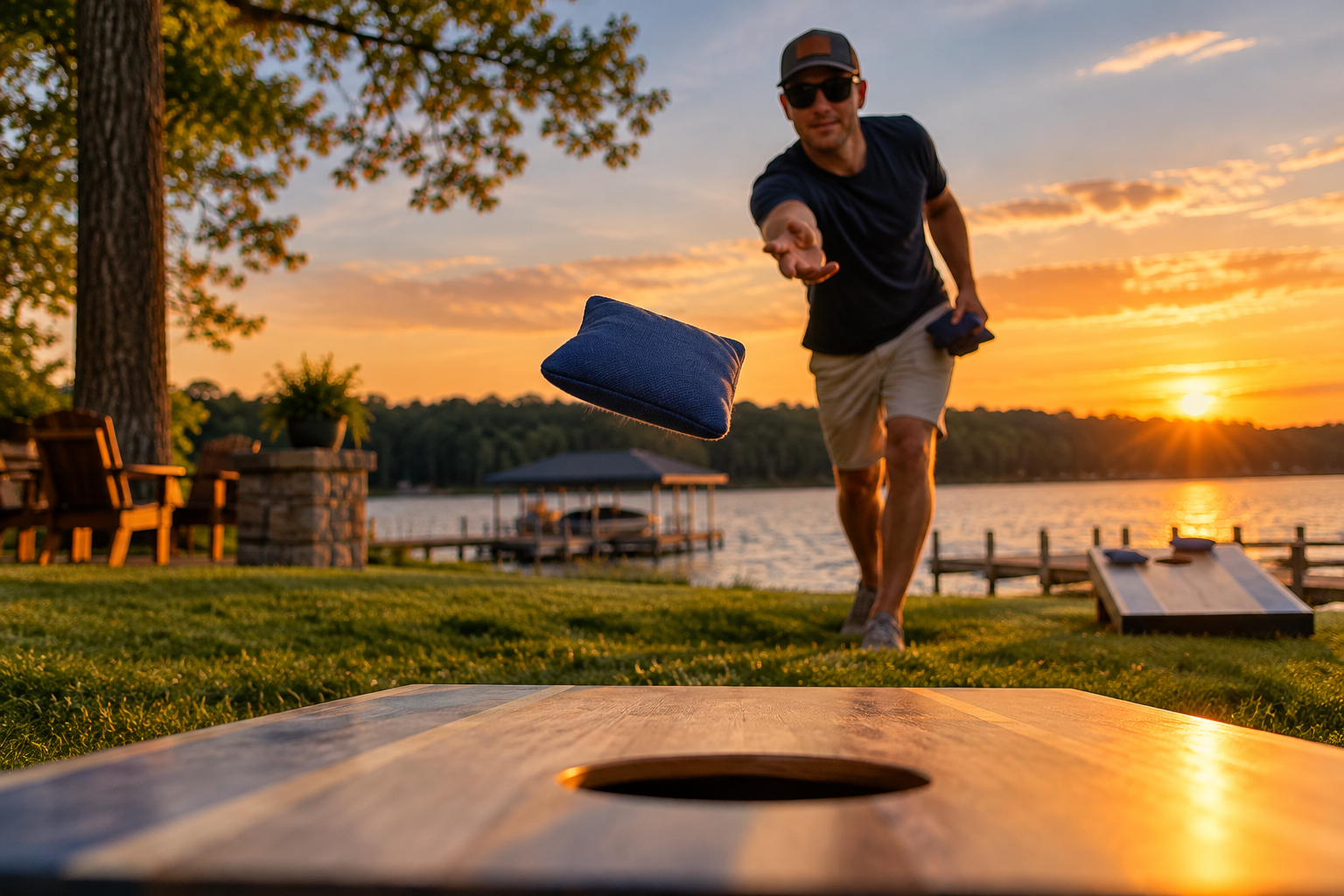
Learning how to throw cornhole bags is one of the most important skills for anyone looking to improve their game. While cornhole may seem simple at first, consistently landing bags on the board requires more than just aiming toward the hole. Your grip, stance, throwing motion, and release all influence where your bag lands and how it moves after making contact with the board.
Whether you’re playing casually in the backyard or preparing for a competitive match, developing a repeatable throwing technique can help you become a more accurate and confident player. Understanding the fundamentals also makes it easier to identify mistakes and adjust your approach as you practice.
HOW TO THROW A CORNHOLE BAG PROPERLY
The most effective way to throw a cornhole bag is to use a smooth, controlled underhand motion that allows the bag to travel toward the board with a consistent trajectory. Rather than relying on arm strength, focus on maintaining balance, releasing the bag naturally, and repeating the same motion with every throw.
Follow these five steps to develop a reliable cornhole throwing technique.
Step 1: Start With the Right Cornhole Grip
How you hold a cornhole bag affects its movement through the air and how it lands on the board. A proper grip should feel comfortable while allowing you to release the bag without excessive force.
Place the bag across your fingers and gently support it with your thumb. Try to distribute the filling evenly so the bag maintains a relatively flat shape. Avoid squeezing it too tightly, as this can make your release less predictable.
Some players prefer folding the bag slightly, while others keep it completely flat in their palm. Experiment with different grips to determine which gives you the most control.
Step 2: Position Your Feet and Establish Your Stance
Your cornhole throwing stance provides the foundation for a balanced and repeatable motion. Stand beside the board with your feet approximately shoulder-width apart, keeping your body comfortable and relaxed.
Many players position their dominant throwing-side foot slightly behind the other foot, allowing them to step forward naturally during the throw. Others prefer a stationary stance with minimal lower-body movement.
Neither approach is automatically better for every player. The goal is to maintain stability and avoid unnecessary movements that could affect your accuracy.
Keep your shoulders facing the target and avoid leaning excessively to either side.
Step 3: Use a Smooth Underhand Swing
Cornhole bags should be thrown using an underhand motion rather than an overhand or sidearm throw.
Allow your throwing arm to swing backward naturally before bringing it forward toward the board. Keep the movement controlled, with your arm following a consistent path.
Think of your arm moving like a pendulum. A smooth swing helps maintain a predictable trajectory and reduces the need for last-second corrections.
Avoid trying to generate excessive power. The board is close enough that controlled movement is generally more valuable than throwing strength.
Step 4: Release the Bag Toward Your Target
Your release point is one of the biggest factors influencing the bag’s flight.
As your arm moves forward, open your fingers naturally and allow the bag to leave your hand. A clean release should send the bag toward the board without an abrupt flick of your wrist.
For many players, releasing the bag with a relatively flat orientation and gentle rotation helps it travel more consistently.
If your bag repeatedly lands short, you may need slightly more forward momentum or a different release angle. If it consistently travels beyond the board, reduce the force of your swing.
Make small adjustments rather than completely changing your throwing motion after every miss.
Step 5: Follow Through After Releasing
Your throwing motion shouldn’t stop the moment the bag leaves your hand.
Continue moving your arm naturally toward the target after releasing the bag. This follow-through encourages a smoother throwing motion and helps prevent abrupt movements that could interfere with your release.
Keep your eyes focused on the intended landing area and maintain your balance until the throw is complete.
With practice, the entire process should begin to feel like one continuous movement rather than several separate steps.
Quick tip: A consistent cornhole throw starts with a comfortable grip, balanced stance, smooth underhand swing, clean release, and natural follow-through. Focus on repeating these fundamentals before experimenting with more advanced techniques.
HOW TO THROW CORNHOLE BAGS MORE ACCURATELY
Accuracy comes from consistency. Players who can repeat their throwing motion are often better positioned to make meaningful adjustments during a game.
Instead of changing your grip, stance, and release every time you miss, focus on developing a technique you can repeat comfortably.
Aim for a Specific Landing Area
One of the most common mistakes beginners make is aiming generally at the board instead of selecting a specific target.
Depending on your strategy, you might aim for the center of the board, an open area near the hole, or a location that allows your bag to slide forward.
Choosing a consistent target makes it easier to evaluate your results and determine whether your throws are landing where intended.
Keep Your Throwing Motion Consistent
Your throwing arm should follow approximately the same path with each toss.
Changing your backswing, stepping distance, or release timing can create unnecessary variation in your results.
Practice making several throws using the same motion, paying attention to where each bag lands. When you notice a consistent pattern, adjust one element at a time.
Control Your Throwing Distance
Regulation cornhole boards are positioned 27 feet apart, measured from the front edge of one board to the front edge of the other.
Learning how much force is necessary to reach the opposite board is an important part of improving your accuracy.
If you’re consistently throwing short, focus on generating slightly more momentum through your swing. If your bags regularly travel beyond the board, reduce the force without sacrificing your natural throwing motion.
You can learn more about proper setup in our guide to cornhole board distance .
HOW TO THROW A FLAT CORNHOLE BAG
A flat cornhole bag throw is a technique where the bag travels through the air with its broad surface relatively level rather than tumbling end over end.
Many experienced players prefer this technique because it can produce a more predictable landing and help the bag interact with the board consistently.
To practice throwing a flat cornhole bag, begin by spreading the filling evenly throughout the bag. Hold it comfortably across your fingers and avoid bunching the material into a tight ball.
During your underhand swing, keep your wrist relaxed and work toward a smooth release. A small amount of controlled rotation can help stabilize the bag during flight.
The objective isn’t necessarily to eliminate all rotation. Instead, you want the bag to maintain a consistent orientation as it travels toward the board.
Start by practicing at a comfortable distance before working toward regulation spacing.
UNDERSTANDING CORNHOLE BAG TRAJECTORY
Trajectory refers to the path your cornhole bag follows through the air. Different trajectories can influence where a bag lands and what happens after it contacts the board.
Higher Arc Throws
A higher arc sends the bag upward before it descends toward the board at a steeper angle.
This approach can be useful when attempting to land a bag in a particular area or reduce how far it travels after contact.
However, excessive height can make distance control more difficult, especially when playing outdoors in windy conditions.
Lower Arc Throws
A lower arc follows a flatter flight path toward the board.
Depending on the bag’s material and the board’s surface, a lower throw may encourage the bag to slide after landing.
This can be useful when attempting to move a bag toward the hole, but throwing too low may cause the bag to strike the front edge of the board.
Finding Your Preferred Throwing Arc
There isn’t one perfect trajectory for every player or situation.
Your preferred arc may depend on your throwing style, bag characteristics, board conditions, and intended landing position.
Experiment with different release angles while keeping the rest of your throwing motion consistent. Over time, you’ll develop a better understanding of which trajectory gives you the most reliable results.
COMMON CORNHOLE THROWING MISTAKES TO AVOID
Even experienced players occasionally struggle with their throwing mechanics. Recognizing common mistakes can help you make adjustments before inconsistent habits become difficult to correct.
- Gripping the bag too tightly: Excessive pressure can interfere with a clean release and make it harder to control the bag’s orientation.
- Throwing with too much force: Cornhole is primarily a game of precision. Overpowering your throws can cause bags to travel beyond the board or land unpredictably.
- Changing your stance repeatedly: Frequent changes to your foot positioning can affect balance and make it harder to develop consistent throwing mechanics.
- Releasing the bag too early or too late: Release timing influences both trajectory and distance. Practice finding a comfortable release point that you can repeat.
- Ignoring the follow-through: Abruptly stopping your arm can make your throwing motion less fluid and contribute to inconsistent releases.
- Making too many adjustments at once: If your throws aren’t landing where intended, change one variable at a time so you can identify what actually improves your results.
CORNHOLE PRACTICE DRILLS TO IMPROVE YOUR THROW
Regular practice is one of the most effective ways to improve your cornhole throwing accuracy. Rather than simply tossing bags without a goal, use structured drills to develop specific skills.
1. The Four-Bag Accuracy Drill
Choose a specific landing area on the board and throw four bags toward that target.
Record how many bags land within your intended area, then repeat the drill for several rounds.
Focus on keeping your grip, stance, and throwing motion consistent throughout the exercise.
2. The Distance Control Drill
Practice landing bags near the front, middle, and back portions of the board.
This exercise helps you understand how small adjustments to throwing force and trajectory affect the landing position.
As you improve, alternate between different target areas rather than throwing toward the same location repeatedly.
3. The Flat Bag Release Drill
Focus on releasing each bag with a consistent, relatively flat orientation.
Pay attention to how the bag rotates during flight and whether it lands flat or tumbles.
You can practice this technique without worrying about scoring until your release becomes more comfortable.
4. The Pressure Practice Drill
Create a simple scoring challenge where you need to land a certain number of bags on the board or through the hole before finishing.
For example, challenge yourself to score at least six points with four bags.
Adding a measurable goal can make practice more engaging and help you prepare for competitive situations.
HOW LONG DOES IT TAKE TO GET BETTER AT CORNHOLE?
Improvement depends on how frequently you practice, your current skill level, and how consistently you apply the fundamentals.
Beginners may notice improvements in their accuracy after several focused practice sessions, particularly when they begin using a repeatable grip and throwing motion.
More advanced techniques, such as controlling bag rotation or consistently landing specific shots, may require additional practice.
Rather than measuring progress only by the number of bags that go through the hole, pay attention to how often your bags land on the board and how closely they approach your intended target.
Tracking these smaller improvements can help you recognize progress even when your overall scores fluctuate.
PUT YOUR CORNHOLE THROWING SKILLS TO THE TEST
Learning how to throw cornhole bags accurately starts with mastering the fundamentals: a comfortable grip, balanced stance, smooth underhand motion, controlled release, and natural follow-through.
As you become more comfortable with these techniques, experiment with different trajectories and landing positions to develop a throwing style that works for you. Consistent practice and small adjustments will generally be more useful than trying to completely change your technique after every missed shot.
Once you’re ready to put your skills into action, try our Cornhole Scorekeeper to track your points during practice sessions or friendly matches. You can also review our complete guide to playing cornhole for a refresher on gameplay and scoring.