
Learn How to Play Cornhole
HOW TO PLAY
CORNHOLE
A complete beginner’s guide to cornhole rules, board setup, scoring, throwing techniques, and everything you need to start playing.
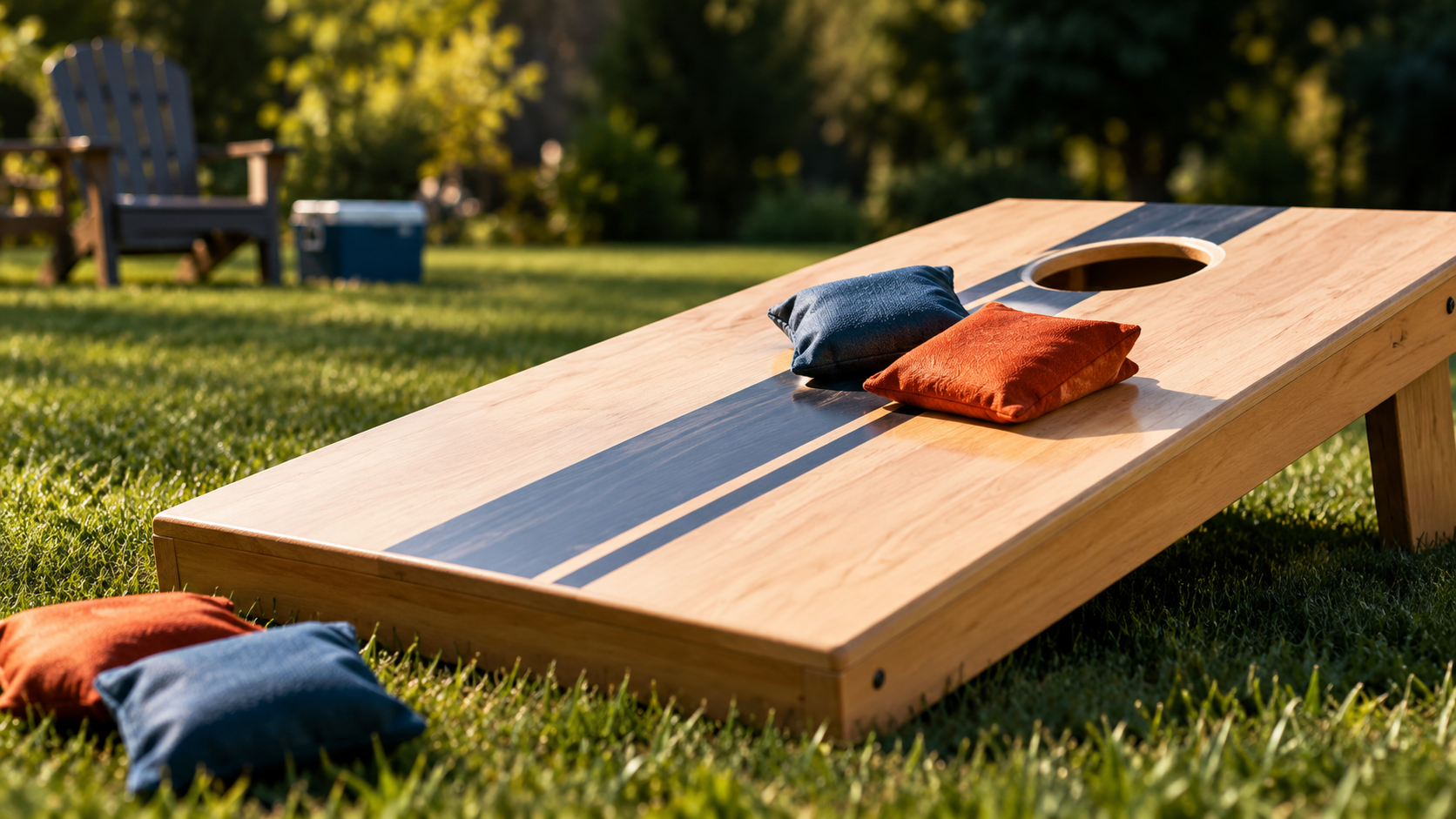
Learning how to play cornhole is simple, which is one of the reasons the game has become so popular at backyard gatherings, tailgates, family events, and organized competitions. Cornhole is played by tossing fabric bags toward a raised wooden board with a hole near the top. Players earn points by landing bags on the board or throwing them through the hole.
Although the basic objective is easy to understand, knowing the official cornhole rules makes the game more enjoyable and consistent. Players need to understand how far apart the boards should be, how turns work, how points are counted, and what determines the winner. These details are especially helpful when playing with people who have different levels of experience.
This guide explains how to play cornhole step by step, from setting up your first game to understanding scoring and improving your throwing technique.
REACH 21 TO WIN.
Each player throws four bags per round. Bags in the hole score three points, bags remaining on the board score one point, and the first player or team to reach at least 21 points at the end of a round wins.
HOW TO PLAY CORNHOLE: THE BASIC RULES FOR BEGINNERS
The main objective of cornhole is to score more points than your opponent by throwing bags toward the opposite board. A traditional game uses two boards and eight bags, with four bags assigned to each player or team. Players take turns throwing their bags, aiming to land them on the board or directly through the hole.
Cornhole can be played as singles, with one player competing against another, or doubles, with two players on each team. The fundamental rules remain the same in either format. Each side throws four bags during a round, and scoring is calculated once all eight bags have been thrown.
In singles, both players begin at the same end of the court, standing in their assigned pitching areas alongside the board. They alternate throws toward the opposite board until all eight bags have been played. After scoring the round, they walk to the other end and throw back toward the first board.
Doubles follows a slightly different arrangement. One player from each team stands at each end of the court. The two players at one end alternate throwing their bags, while their teammates wait at the opposite end. Once the round is scored, the players at the other end throw back.
Position the boards 27 feet apart, measured from front edge to front edge.
Play one-on-one or with two teams of two players each.
Each side throws four bags, taking turns one bag at a time.
Calculate the difference between the two sides’ points after all eight bags have been thrown.
Players must throw their bags underhand and remain behind the foul line during the throw. The front edge of the board establishes the foul line, while the pitching areas are located alongside each board. Players should remain in their assigned lanes throughout the game.
The player or team that scored in the previous round throws first in the next round. If neither side scores, the side that threw first in the previous round retains the first throw. Play continues until one side reaches the winning score.
HOW TO SET UP CORNHOLE BOARDS BEFORE PLAYING
Before learning how to throw a cornhole bag, it helps to understand how the playing area should be arranged. A standard cornhole setup includes two raised boards facing one another, with enough room for players to stand and throw safely.
Regulation cornhole boards are approximately four feet long and two feet wide, with a six-inch hole near the raised end. The boards should be placed on a flat, stable surface so they remain in position throughout the game.
The official distance between cornhole boards is 27 feet, measured from the lower front edge of one board to the lower front edge of the other. This is the standard distance used for adult regulation games and organized competition.
| Cornhole Equipment | Standard Measurement |
|---|---|
| Distance between boards | 27 feet |
| Board dimensions | 2 feet × 4 feet |
| Hole diameter | 6 inches |
| Bags per player or team | 4 bags |
| Total bags needed | 8 bags |
| Traditional winning score | 21 or more points |
When playing in a backyard, driveway, or park, check that the area between the boards is clear. Players should have enough space to throw without interfering with other people or nearby games. The boards should also be aligned directly across from one another rather than positioned diagonally.
Beginners and younger players may prefer a shorter distance while learning the game. Moving the boards closer together can make it easier to reach the target and develop throwing confidence. However, players interested in regulation play should eventually practice at the full 27-foot distance.
For a more detailed explanation of court measurements, see our guide on how far apart cornhole boards should be .
HOW DOES CORNHOLE SCORING WORK?
Understanding how to score cornhole is one of the most important parts of learning the game. Points are awarded based on where each bag finishes after a round. A bag that passes completely through the hole is worth three points, while a bag that remains on the board is worth one point.
Bags that miss the board, touch the ground before landing on it, or come to rest touching both the ground and board do not receive points. Players should wait until all eight bags have been thrown before determining the final score for the round.
| Where the Bag Lands | Points |
|---|---|
| Bag passes through the hole | 3 points |
| Bag remains on the board | 1 point |
| Bag misses the board | 0 points |
| Bag touches the ground first | 0 points |
| Bag rests on board and ground | 0 points |
Understanding Cancellation Scoring
Cornhole uses a system called cancellation scoring. Instead of both teams adding their full points to the scoreboard, the lower score is subtracted from the higher score at the end of each round. Only the difference is added to the winning side’s overall total.
For example, imagine Team Orange throws two bags through the hole and lands one bag on the board. That gives Team Orange seven points for the round. Team Navy lands two bags on the board, giving them two points. After cancellation, Team Orange earns five points toward its overall score.
If both teams score the same number of points, the round is considered a wash, and neither side adds anything to its overall score. This system makes each throw important, since one well-placed bag can cancel out points earned by an opponent.
You can also use our free cornhole scorekeeper to track points during a game without having to calculate everything manually.
HOW TO THROW A CORNHOLE BAG CORRECTLY
Once you understand the rules and scoring, the next step is learning how to throw a cornhole bag consistently. While everyone develops their own throwing style, beginners generally benefit from starting with a comfortable stance and a controlled underhand motion.
Stand alongside the board inside your designated pitching area, keeping your body balanced and your shoulders directed toward the opposite target. Hold the bag comfortably in your throwing hand without squeezing it too tightly.
Begin the throw by swinging your arm backward in a relaxed motion, then bring it forward toward the board. Release the bag underhand while your arm is moving toward the target. The goal is to create a smooth, repeatable throwing motion.
Focus on Control Before Power
One of the most common beginner mistakes is trying to throw the bag too hard. Excessive force can make it difficult to control where the bag lands and may cause it to slide off the back of the board.
Instead, focus on throwing with enough force to comfortably reach the board. A consistent release and predictable arc are often more useful than simply increasing throwing strength. As your accuracy improves, you can adjust the trajectory to suit different situations.
Practicing a relatively flat bag release can also help improve consistency. When a bag lands flat, it is generally easier to predict how it will behave on the board. This becomes especially important when trying to land bags near the hole or avoid bags already in play.
Beginner Tip: Practice landing bags consistently on the board before concentrating on throwing them directly through the hole. Developing reliable board placement makes scoring more predictable.
As you gain experience, you may begin experimenting with different types of throws, including bags designed to slide toward the hole or land with less forward movement. For new players, however, accuracy and consistency should remain the main priorities.
HOW TO WIN CORNHOLE AND IMPROVE YOUR GAME
Traditional cornhole games are played to 21 points. The first player or team to reach or exceed 21 points at the conclusion of a round wins. Under standard rules, players do not need to land on exactly 21 points or win by a two-point margin.
Winning consistently requires more than making occasional shots through the hole. Players who can reliably land bags on the board are often better positioned to score throughout a game. A single bag through the hole may be valuable, but repeated misses can make it difficult to maintain an advantage.
Another important part of cornhole strategy is paying attention to the bags already on the board. Depending on their position, players may choose to aim for an open area, attempt to slide a bag into the hole, or place a bag where it makes the opponent’s next throw more difficult.
For beginners, the best approach is to build a consistent routine. Stand in a similar position, use the same basic throwing motion, and focus on reaching the board accurately. Small improvements in consistency can make a noticeable difference over several rounds.
It’s also helpful to practice at the official 27-foot distance once you’re comfortable with the basics. Playing at a consistent distance allows you to better judge the strength and release angle needed for accurate throws.
Learning how to play cornhole doesn’t require complicated equipment or extensive experience. With two boards, eight bags, an understanding of the scoring system, and a little practice, anyone can begin enjoying the game. Once you’ve mastered the basic cornhole rules, you can gradually develop better accuracy, learn new strategies, and become more confident during competitive play.
Rules reference: American Cornhole League and American Cornhole Organization .