
Learn How to Play Cornhole
HOW FAR APART ARE
CORNHOLE BOARDS?
Learn the official cornhole board distance, how to measure your playing area, and how to set up a cornhole court correctly for your next game.
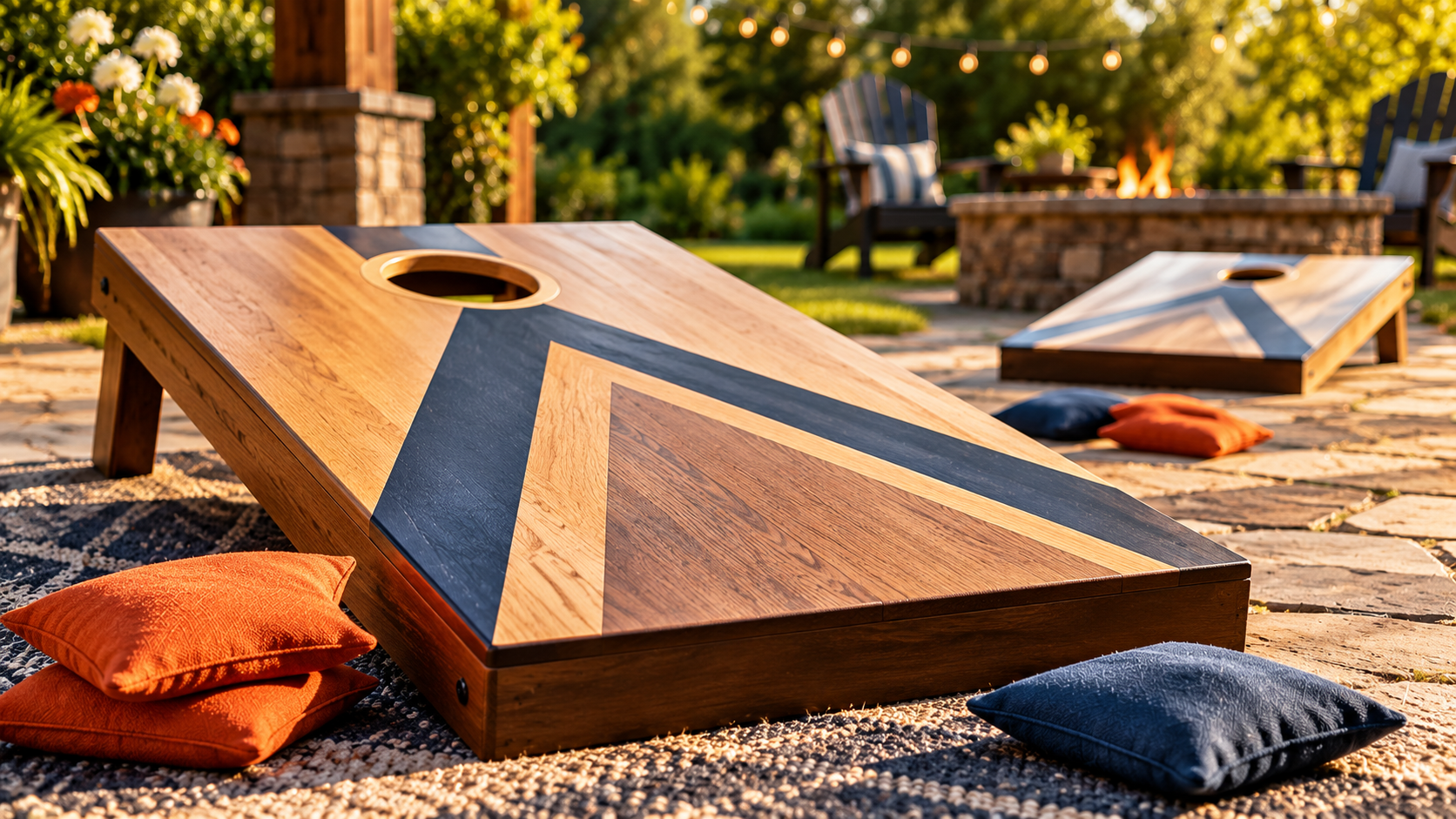
Whether you’re setting up a cornhole game in your backyard, preparing for a tournament, or playing with friends at a tailgate, knowing the correct distance between cornhole boards is an important part of the game. Placing the boards too close together can make scoring easier, while setting them too far apart can make it unnecessarily difficult to land a bag on the board.
Fortunately, cornhole has a straightforward set of measurements that makes setting up a playing area simple. Understanding the official cornhole distance also helps players develop consistency with their throws and become more comfortable playing on regulation courts.
WHAT IS THE OFFICIAL CORNHOLE BOARD DISTANCE?
The official distance between cornhole boards is 27 feet, measured from the front edge of one board to the front edge of the opposing board. This is the standard distance used for regulation cornhole games and competitive play.
Regulation cornhole boards should be positioned 27 feet apart, measuring from the front edge of one board to the front edge of the other.
The 27-foot measurement is particularly important because it creates a consistent throwing distance for both teams. Players can practice their accuracy, throwing motion, and bag placement without having to adjust to a different court layout each time they play.
Keep in mind that the measurement is taken between the boards themselves, not between their holes or their back edges. Measuring from the wrong location can unintentionally shorten or lengthen the playing distance.
HOW TO MEASURE THE DISTANCE BETWEEN CORNHOLE BOARDS
Measuring your cornhole court correctly only takes a few minutes, and doing it before the game begins can prevent disagreements about the setup. A standard tape measure is usually all you need, although a longer measuring tape can make the process easier.
- Place your first cornhole board on a flat, stable playing surface with the raised end facing away from the opposing board.
- Locate the front edge of the first board, which is the lower end closest to the opposing board.
- Extend your measuring tape 27 feet toward the opposite end of the playing area.
- Position the front edge of the second board at the 27-foot mark, facing the first board.
- Check that both boards are aligned with each other and that there is enough space for players to throw safely.
Once both boards are positioned, take a moment to check the alignment from either end of the court. The boards should face each other directly rather than sitting at different angles. Even a small difference in alignment can affect how players approach their throws.
For regular backyard games, you can mark the board positions with removable tape or another temporary marker. This makes it easier to recreate the same setup without measuring the entire court before every game.
WHAT ARE THE OFFICIAL CORNHOLE COURT DIMENSIONS?
Board spacing is only one part of setting up a proper cornhole court. Regulation games also use standardized board dimensions, hole placement, and pitching areas to keep gameplay consistent.
| Measurement | Regulation Size |
|---|---|
| Distance between boards | 27 feet, front edge to front edge |
| Board length | 48 inches |
| Board width | 24 inches |
| Hole diameter | 6 inches |
| Hole center from top edge | 9 inches |
| Raised back edge | 12 inches |
A regulation cornhole board measures four feet long and two feet wide, with a six-inch hole near its raised end. The back of the board sits approximately 12 inches above the playing surface, creating the familiar slope that allows bags to slide toward the hole.
In addition to the boards themselves, players need room to stand beside the boards and complete an underhand throwing motion. The foul line is established at the front edge of each board, and players must avoid crossing that line when releasing their bags.
If you’re new to the game, our guide on how to play cornhole explains the basic rules, scoring system, and throwing techniques that go along with a regulation court setup.
HOW FAR APART SHOULD CORNHOLE BOARDS BE FOR KIDS AND BEGINNERS?
Although 27 feet is the official distance, not every cornhole game needs to follow tournament measurements. Backyard games with younger children or first-time players can be more enjoyable when the boards are placed closer together.
For children, a shorter throwing distance can make it easier to reach the board and develop basic hand-eye coordination. Beginners may also benefit from temporarily reducing the distance while they learn how to control their throwing motion and keep their bags flat in the air.
There isn’t one universally required recreational distance for every age group. Instead, adjust the spacing based on the players’ abilities and the amount of room available.
| Player Group | Suggested Distance |
|---|---|
| Young children | 10–15 feet |
| Older children | 15–21 feet |
| Adult beginners | 21–27 feet |
| Regulation adult play | 27 feet |
These shorter distances are informal recommendations for recreational games rather than official tournament requirements. As players become more comfortable landing bags on the board, gradually increase the distance until they can play from the regulation 27-foot spacing.
WHY CONSISTENT BOARD SPACING MATTERS WHEN PLAYING CORNHOLE
Keeping your cornhole boards at a consistent distance does more than make your playing area look organized. It helps players build muscle memory and improve the accuracy of their throws over time.
Cornhole involves repeating a controlled underhand throwing motion while accounting for the weight, rotation, and landing position of each bag. When the boards are moved closer or farther apart between games, players have to make adjustments to their throwing strength and trajectory.
A consistent setup is especially helpful for anyone practicing specific techniques, such as sliding a bag toward the hole, blocking an opponent’s path, or attempting an air-mail shot directly into the hole.
It also makes casual competition fairer. When everyone plays on the same properly measured court, differences in scoring are more likely to reflect player skill rather than changes in the playing environment.
Before your next game, measure the boards from front edge to front edge, check that they’re aligned, and make sure the playing surface is stable. With the correct 27-foot distance and enough room to throw comfortably, you’ll have a reliable cornhole setup whether you’re practicing at home or preparing for more competitive games.